Stop Image-Based Abuse Law Campaign
The Stop Image-Based Abuse Campaign, spearheaded by Jodie, a survivor of deepfake abuse, launched on 19th June 2024 in collaboration with the End Violence Against Women Coalition, Professor Clare McGlynn, #NotYourPorn and GLAMOUR UK. This campaign and our work with Baroness Owen led to the UK's first law criminalising deepfake abuse and its solicitation.
Campaign Overview
The Stop Image-Based Abuse Campaign, spearheaded by Jodie, a survivor of deepfake abuse, launched on 19th June 2024 with the End Violence Against Women Coalition, Professor Clare McGlynn, #NotYourPorn and GLAMOUR UK. The campaign aimed to introduce a dedicated image-based abuse law that would:
Strengthen criminal laws on creating, taking and sharing intimate images without consent (including sexually explicit deepfakes).
Improve civil laws for survivors to take action against perpetrators and tech companies.
Prevent image-based abuse through comprehensive relationships and sex education.
Fund specialist services that support victims/survivors of image-based abuse.
Create an Online Abuse Commission to hold tech companies accountable.
To ensure image-based abuse remained on Keir Starmer’s new Labour Government’s agenda, we wrote to the then Minister for the Department for Science, Innovation and Technology, Peter Kyle. Please find our open letter to Peter Kyle below.
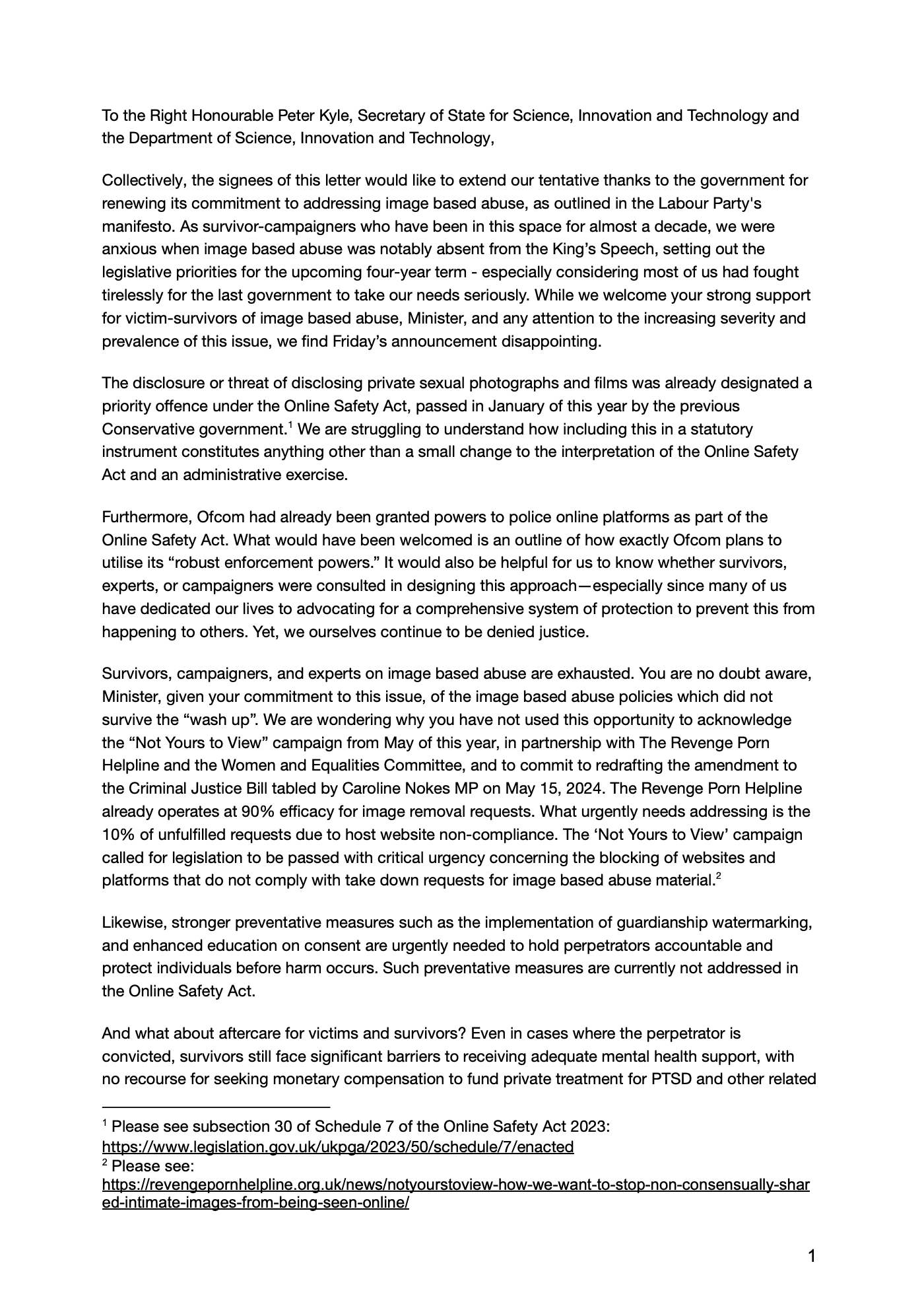
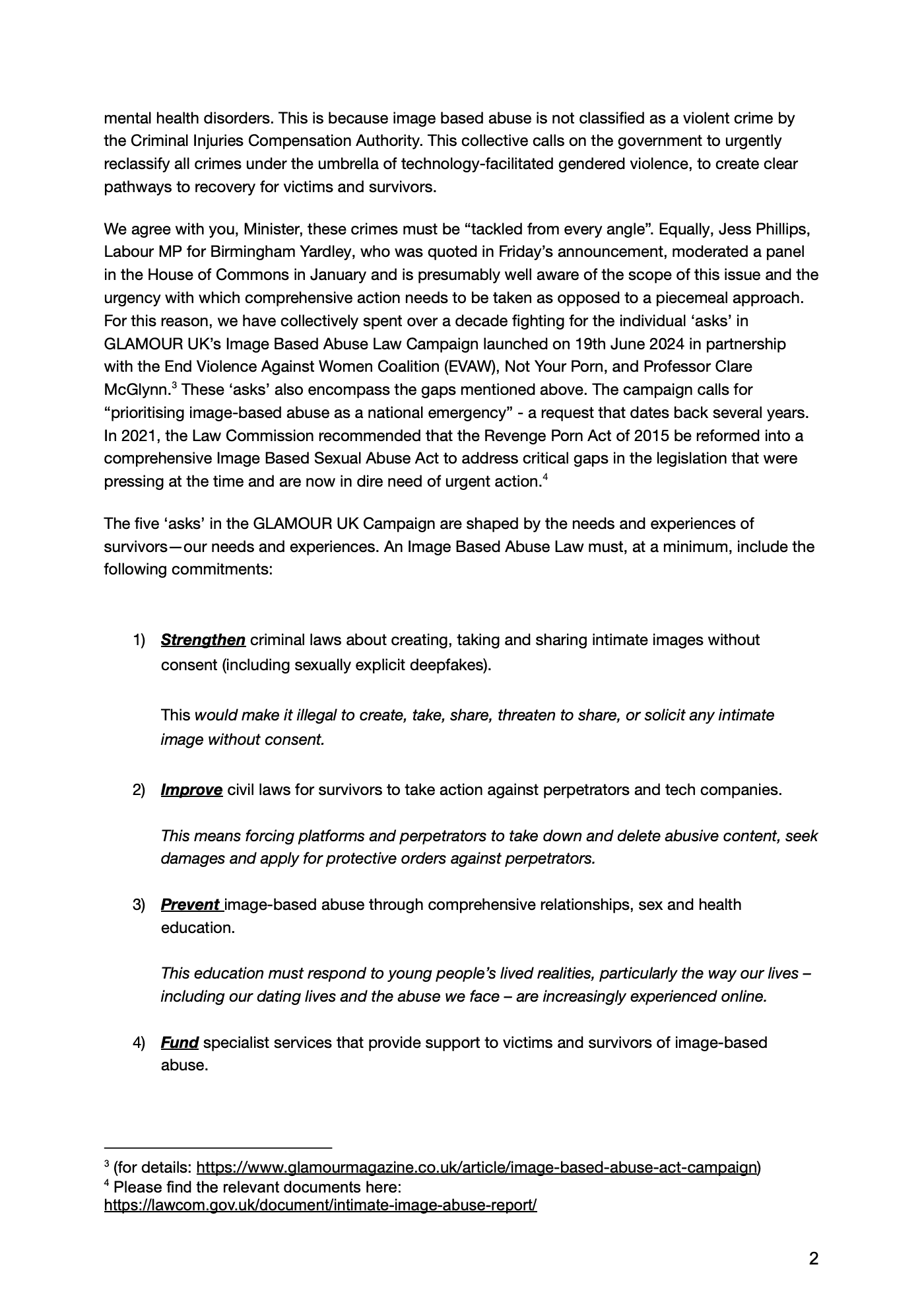

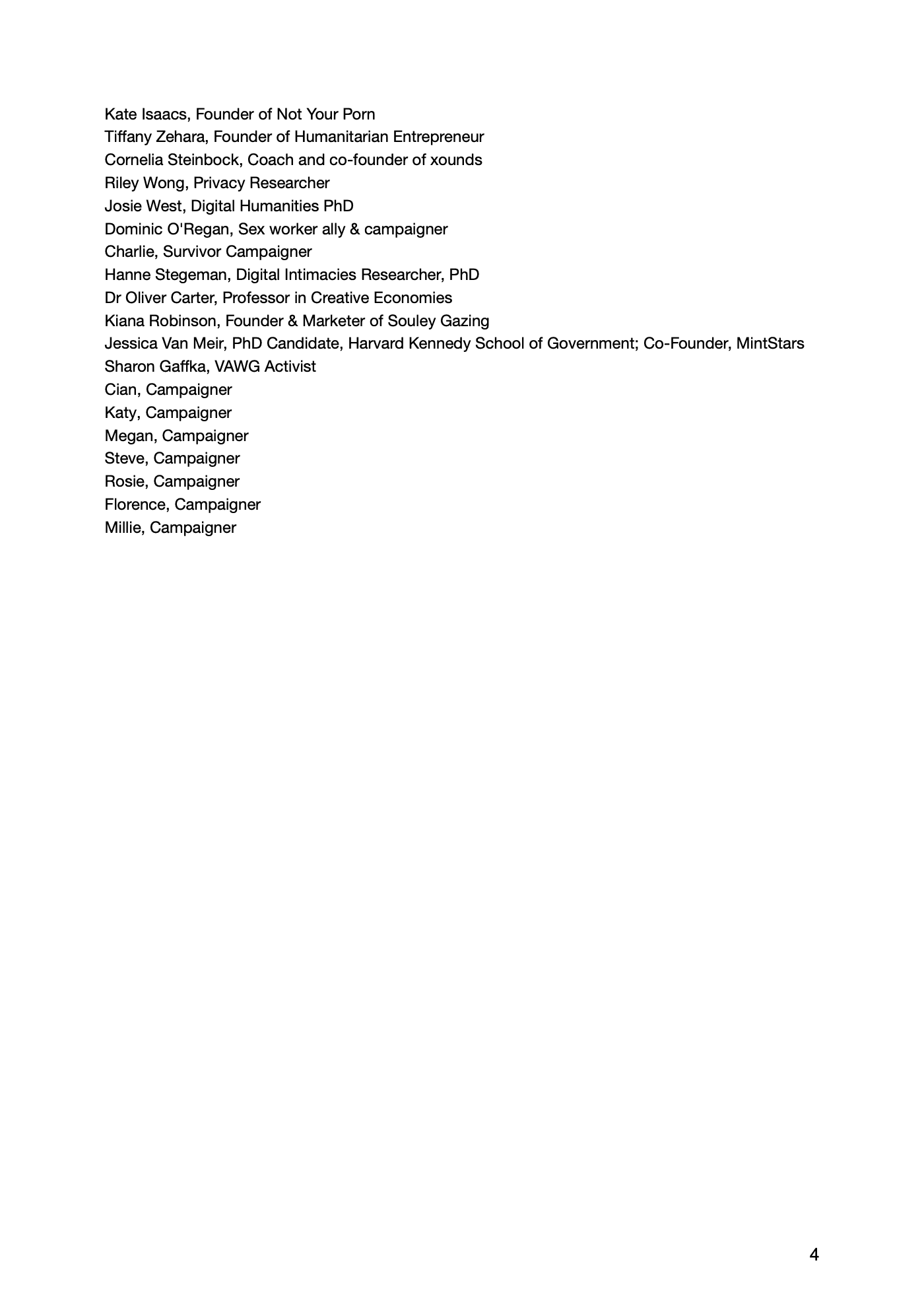
As part of this campaign, #NotYourPorn and other partners supported Jodie in launching a petition to criminalise creating sexually explicit deepfakes, an unacceptable gap in UK legislation, securing the support of 73,000 people and successfully changing the law.
Alongside this campaign, we supported Baroness Owen on her Private Members Bill to criminalise sexually explicit deepfakes and their solicitation, crafted from Jodie’s lived experience. It received wide cross-party support in the Lords. After considerable effort to support Baroness Owen, we pushed the Government to introduce its own amendment banning deepfake abuse. However, this was based on perpetrator intent rather than consent. We continued to campaign, which drove the Government to U-Turn and introduce a consent-based amendment.
Our collective efforts finally led the Government to bring the offences into force on 6th February 2026. The criminalisation of deepfakes was based on the violation of consent rather than a perpetrator’s intent, closing loopholes, and it also goes one step further by criminalising someone asking someone else to create a deepfake of a person.
Given that the evolution of laws on image-based abuse has been slow and left huge gaps for survivors to navigate, it cannot be stressed enough how vital it was that these elements were secured in the first iteration of legislation on deepfakes.
Relevant reporting:
https://www.glamourmagazine.co.uk/article/image-based-abuse-act-campaign
https://www.glamourmagazine.co.uk/article/glamour-campaign-10-downing-street
https://www.thetimes.com/uk/politics/article/deepfakes-nr26deepfake-kvnw50hm7